
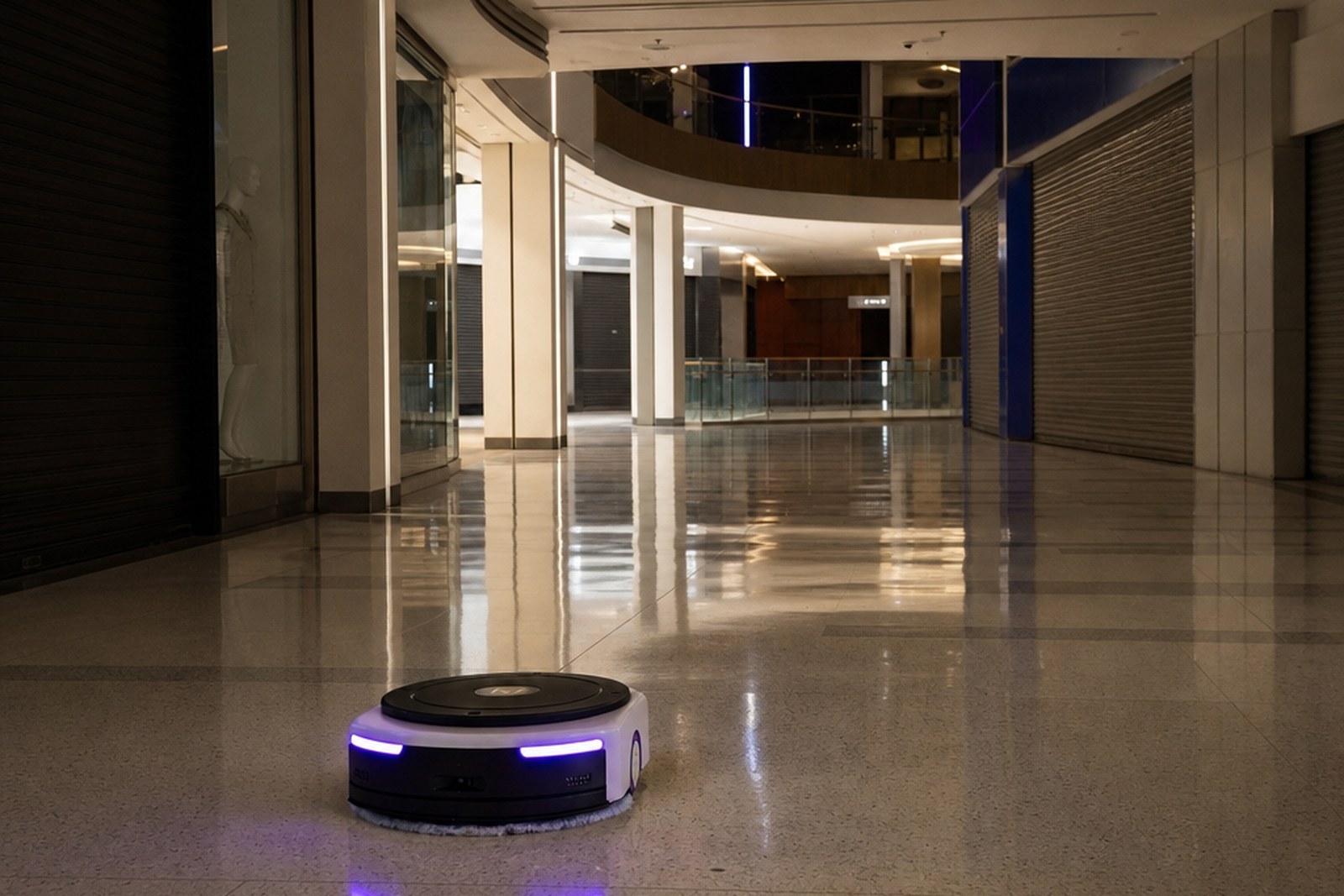
Picture a shopping centre before opening time. There is a large concourse to clean, and fewer people on shift than planned. The supervisor has to choose. The shop fronts get done properly, the big floor gets a quick pass, and nobody is happy with either.
That big floor is what this article is about. Not robots in general. One narrower question, asked the way an operations manager would ask it: which cleaning jobs can a robot take off your roster in 2026, and which ones should nobody be selling you?
The answer depends on the site. So treat what follows as a starting point, not a promise about any one machine. A useful site check starts with the floor, the route, the working hours and the exact product details.
The job these machines are built for
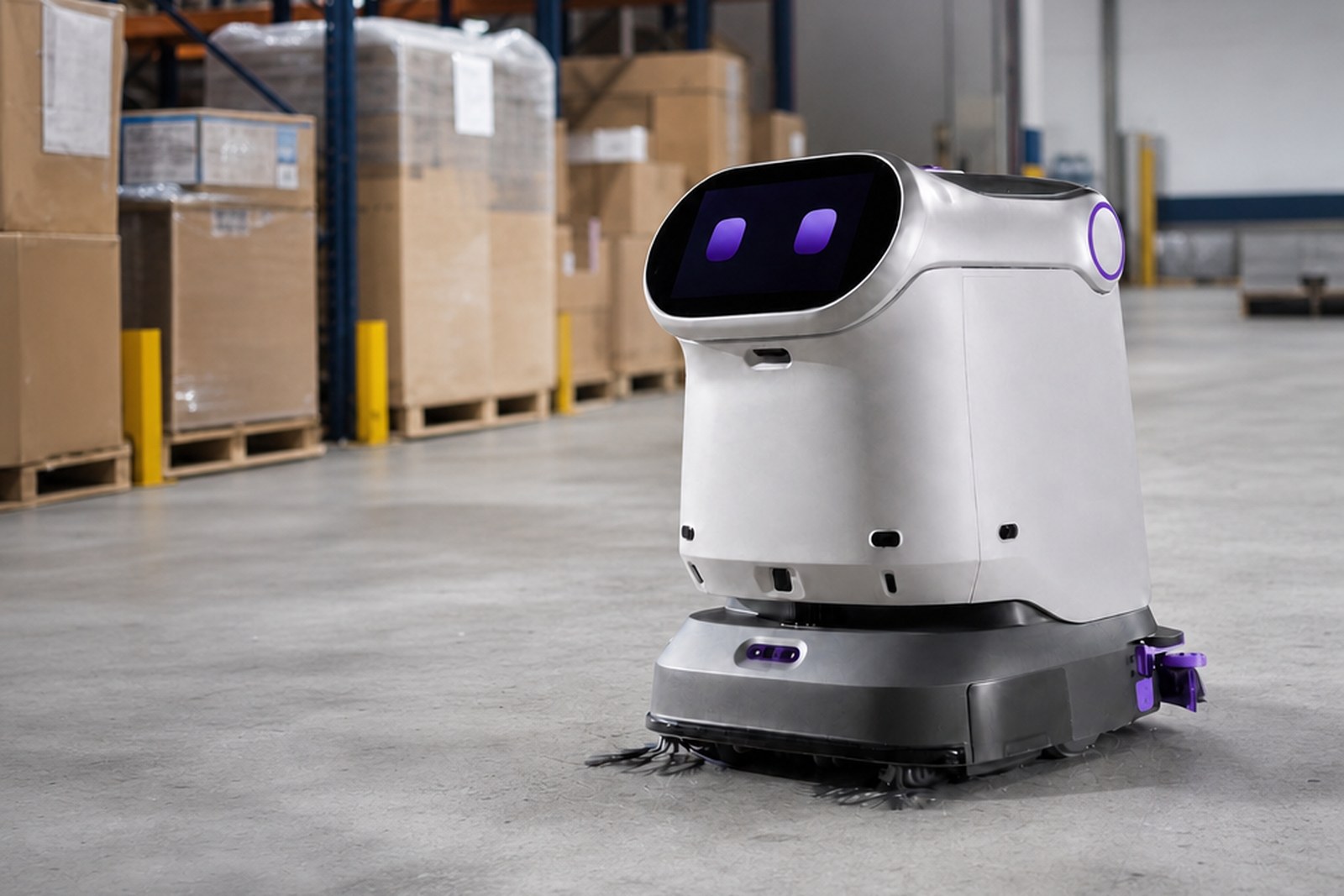
Today’s commercial cleaning robots suit one kind of work: large, open, flat floors, cleaned on a repeat schedule. A warehouse aisle. A mall concourse. A clear hotel lobby during quiet hours. Long runs of even, sealed floor.
The reason is simple. A robot cleans well when the job is defined. On a big open floor, the route can be mapped once and run to a set schedule. The surface behaves the same way each night. Those are useful questions to ask about your own site, though the answer still depends on the machine you choose.
Here is what the current industrial units can do, in Kingswell’s own words. They clean spaces up to 2,500 square metres. They mop, vacuum, scrub and sweep in one pass. They lift the water as they go, so the floor is left drier and safer than a mop leaves it. They charge themselves, and they empty and refill their own water. That means no manual intervention between runs.
They also handle people better than most buyers expect. Obstacle avoidance lets them work safely around staff and customers, so a machine can run while you are open. It does not have to wait for an empty building.
Where these machines still do not fit
Now the other half of the answer, because it decides whether your first project works.
Do not assume a floor robot can cover a bathroom. Stairs need another method. Cluttered storerooms may be a poor fit too. Uneven or mixed floor surfaces need checking against the exact product sheet and a site test, not a guess. Furniture, displays and busy areas all need checking for the route and the machine you pick.
The hotel lobby shows the line clearly. A wide, open lobby floor during quiet hours is a job worth assessing. The full public-area clean of a working hotel, with its mixed surfaces and its ornaments, is a different question. Same building. The answer can change within it.
We raise this in every scoping call. Giving a robot the wrong first task is the fastest way to waste money on automation.
What it means for your team
A site may ask one team to cover open floors, stairs, small rooms and detail work. A floor robot may take on one defined route while people handle the work that needs judgement and care. The right split depends on the site, the working hours and the system you choose.
This is not about having fewer people. It is about which tasks are worth a person’s time. The late shift, the repeat runs, the areas that get skipped when somebody calls in sick: those are the jobs nobody wants to manage. Any change to your roster should be based on your real site and your chosen system, not on a general rule.
What it costs, and what comes back
The cost answer depends on four things. Your floor area. Your working hours. What you pay for cleaning now. And the repeat task a system could take on. No general percentage should be treated as a result for your site.
James Attard Kingswell, who founded Kingswell, puts it this way. The team has worked through a number of site scenarios. Sites running more than one cleaner usually save 30 to 40 per cent a month on floor cleaning. If you subcontract that work now, the saving is often bigger. You stop paying the contractor’s margin as well as the hours.
That is a range from our own scoping work. It is not a quote, and it is not a promise for your building.
Funding may cut the cost of a project that qualifies. Check the scheme, the rate and the fit before you rely on any figure. Kingswell can scope the system and list what the funding adviser needs to confirm. Any support depends on the current scheme rules.
What a setup actually involves
A cleaning robot may need site setup before it runs well. The proposal should say how the route, the schedule and the site configuration work for the exact product. Training and handover belong in that proposal too.
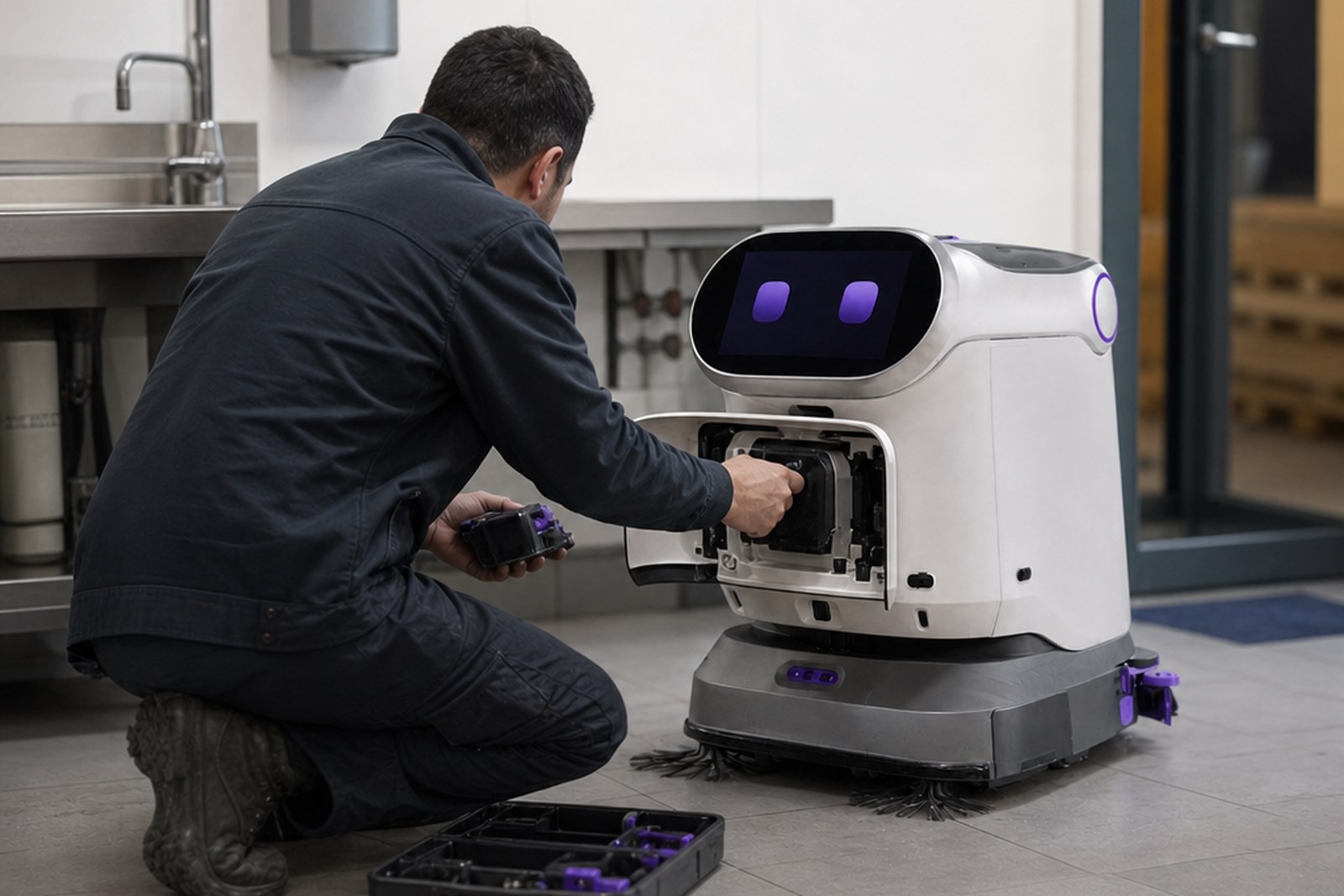
Support matters as much as the machine. Before you approve anything, ask three questions. Who handles maintenance? How do you report a fault? How are spare parts supplied? Kingswell is local, so support is a phone call and a short visit away rather than a ticket sent overseas. The exact arrangement still depends on the product and the project.
Kingswell works in four steps, in this order. Scope the real requirement. Prove it small, in our lab or in your building, before you spend the real budget. Deploy it, and sign off once it performs. Then support it. Most automation projects that disappoint skipped the proving step.
The honest first step
If you run large open floors, book an initial meeting. We will look at your operation and tell you which of your floors suit a robot and which do not. If your site is a poor fit, we will say so.
Book it through kingswellinnovation.com, or contact Kingswell directly.
Hello world! (copy)
See AI improving radiology workflows firsthand.
Practical AI Integration
Understand how AI fits into clinical practice.
Empower Expertise
Support radiologists with faster, accurate insights.
Shape Precision Medicine
Discover AI’s role in efficient healthcare delivery.